In the past month, we have laid the foundation for our nursery project in Tandayapa. The first few weeks since our arrival in the valley have been dedicated to understanding the local context, building connections with the community, and designing a technical solution that will keep the nursery running with minimal effort.
Building the Connection On November 19th, we visited the valley for the first time. It became clear that for this nursery to succeed, we couldn't just be "outsiders" coming to help; we needed to be part of the village.
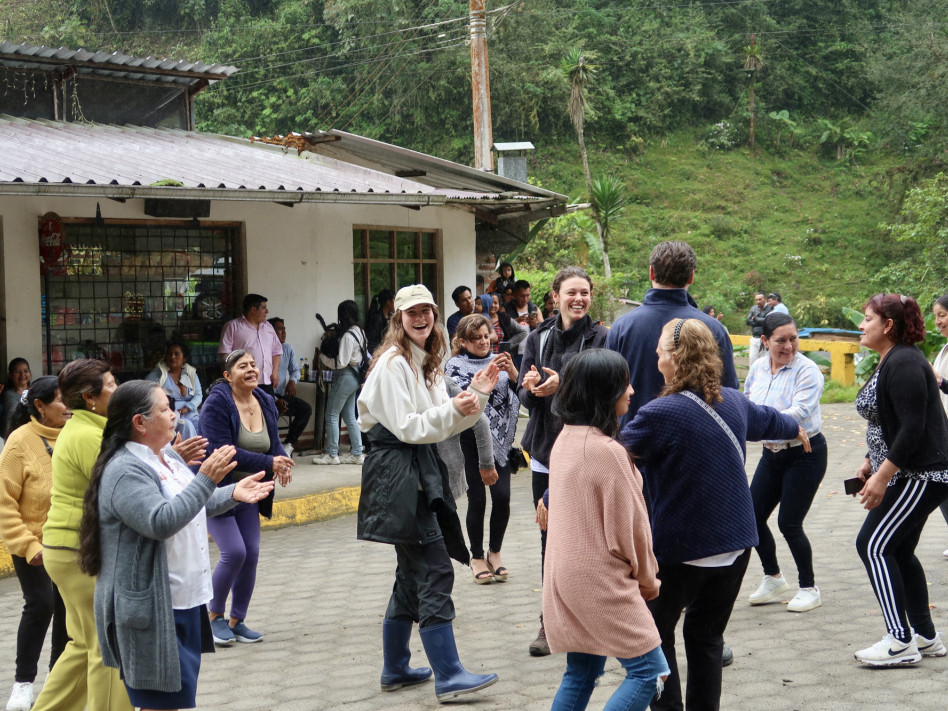
A few days later, we were lucky to join the community as they celebrated the festival of the Holy Virgin Mary. This was the perfect opportunity to connect. We wanted to show that we cared about their home and their traditions. We participated in a running competition, the hilarious salsa de tomate games, and danced late into the night. We were received with warm, open arms, marking the first real connection with the community.
Gathering Knowledge To ensure we were using the right methods, we visited the nursery Vivero Milpe to learn from Luis Yánez, a specialist in reforestation. He taught us about "balance", working with nature rather than against it. We learned about organic soil mixes and how local species require specific rhythms of care.
We also attended a workshop at the university station on creating 100% natural biofertilizers using microorganisms collected directly from the forest floor. These lessons are helping us design a system that is sustainable and chemical-free.
The Irrigation System With the community on board and knowledge gathered, we began working on the design for the nursery's new irrigation system.
The main challenge is that the plants require constant care, which makes long-term maintenance difficult for the community. To address this, we designed a capillary sand bed system that waters plants from below instead of spraying from above. The raised beds are filled with gravel and sand, with a water layer at the bottom. Through capillary action, moisture is drawn upward through the sand to the plant roots, providing steady, automatic, and efficient irrigation.
The next step is to purchase the supplies in Quito and transport them to the valley. We are planning a "Minga" (a traditional community work day) where we will build this system together with the locals.
More updates to follow soon!